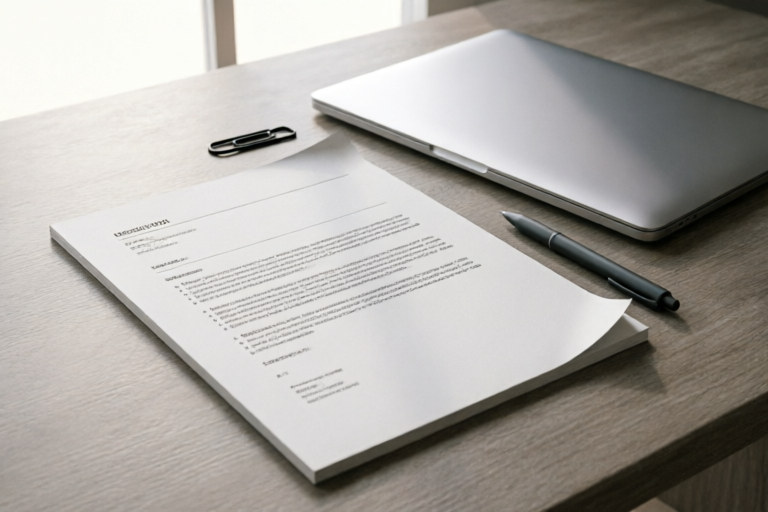
Ready-to-Use Business Templates for Formal Emails
Effortless Professionalism with Ready-to-Use Business Templates
Introduction to Formal Email Templates
In today's fast-paced business environment, maintaining professional communication is more important than ever. One way to ensure your emails are always polished and effective is by using ready-to-use business templates. These templates provide a structured framework that helps you maintain consistency in your messaging while saving time and effort.
Importance of Professional Communication in Business:
- First impressions matter—whether it's a potential client or a business partner, the tone and professionalism of your email can make or break a deal.
- Consistency builds trust—using templates ensures that every email you send reflects the same level of professionalism and attention to detail.
- Efficiency saves time—pre-written templates allow you to focus on the content rather than the format, speeding up the drafting process.
Overview of the Benefits of Using Pre-Written Templates:
- Improved accuracy—reduce the risk of errors by using proven templates.
- Enhanced readability—structured templates improve the overall readability of your emails.
- Increased efficiency—save time by reusing templates for similar situations.
Types of Business Emails and Their Templates
There are various types of business emails, each requiring a specific tone and structure. Below are some common types along with suggested templates:
Introduction Emails: Setting the Tone for New Relationships
When reaching out to someone for the first time, it's crucial to set the right tone. An introduction email should be concise yet friendly, providing enough context to establish rapport.
Subject: Introduction & Collaboration Opportunity

Dear [Recipient's Name],

I hope this message finds you well. My name is [Your Name], and I work as [Your Position] at [Your Company]. We recently learned about your work in [specific field], and we believe there might be opportunities for collaboration. Would you be available for a brief discussion to explore potential synergies?

Best regards,
[Your Name]
[Your Contact Information]
Follow-Up Emails: Keeping Momentum After Meetings or Calls
A follow-up email is essential for maintaining momentum after a meeting or phone call. It serves as a reminder of what was discussed and outlines next steps.
Subject: Follow-Up from Our Meeting on [Date]

Hi [Recipient's Name],

Thank you for taking the time to meet with us yesterday. As discussed, here are the key points from our conversation:

- [Point 1]
- [Point 2]
- [Point 3]

Next steps include [next step details]. Please let me know if you have any questions or need further clarification.

Best,
[Your Name]
Request for Information: Structuring Polite Inquiries
When requesting information, it's important to remain courteous and clear. A well-crafted request will increase the likelihood of receiving a prompt response.
Subject: Request for Additional Information

Dear [Recipient's Name],

I hope this email finds you well. I would like to kindly request some additional information regarding [specific topic]. Could you please provide [details of the information needed]? This will greatly assist us in moving forward with [related project or task].

Thank you very much for your assistance.

Best regards,
[Your Name]
Notification Emails: Informing Stakeholders About Important Updates
Keeping stakeholders informed is vital for maintaining transparency and ensuring everyone is on the same page. Notification emails should be clear and concise, highlighting the most important details.
Subject: Important Update Regarding [Project/Event]

Hello [Recipient's Name],

We wanted to inform you of an important update related to [project/event]. The latest developments include:

- [Update 1]
- [Update 2]
- [Update 3]

Please review these changes and let us know if you have any questions or concerns.

Best,
[Your Name]
Key Elements of Effective Business Email Templates
To create truly effective business email templates, certain key elements must be included:
Clear Subject Lines That Capture Attention
The subject line is often the first thing recipients see, so it needs to grab their attention immediately. Make sure it accurately reflects the content of the email and encourages the recipient to open it.
Professional Greetings and Sign-Offs
Always start with a professional greeting such as 'Dear [Recipient’s Name],' and end with a polite sign-off like 'Sincerely,' or 'Best regards.' This adds a personal touch while maintaining formality.
Concise Body Content with Actionable Points
The body of the email should be concise yet informative. Include all necessary details but avoid unnecessary fluff. Highlight actionable points clearly so that the recipient knows exactly what needs to be done.
How to Customize Templates for Your Needs
While templates provide a great starting point, they may need to be adapted to fit specific circumstances or preferences:
Adapting Templates to Different Industries
Different industries have different jargon and expectations. Tailor your templates to reflect industry-specific terminology and norms.
Personalizing Messages Based on Recipient Preferences
Consider the recipient's role and relationship with your company when customizing your message. For example, emails sent to senior executives might require a more formal tone compared to those sent to colleagues within the same department.
Tools and Resources for Creating and Managing Templates
Several tools can help you create and manage business email templates efficiently:
Recommended Software for Template Creation
- Microsoft Outlook: Offers built-in features for creating and storing email templates.
- MailChimp: Provides customizable email templates for marketing purposes.
- Campaign Monitor: Allows you to design and send professional-looking emails.
Tips for Organizing and Accessing Templates Efficiently
- Create folders within your email client for different types of templates.
- Label templates clearly so you can find them quickly.
- Regularly review and update templates to ensure they remain relevant.
Conclusion: Maximizing Efficiency with Templates
Using ready-to-use business templates can significantly enhance your email communication by ensuring professionalism, clarity, and efficiency. By following the guidelines outlined above, you can tailor these templates to suit your specific needs and industry requirements. Incorporating templates into your workflow not only saves time but also improves the quality of your correspondence, ultimately leading to better business outcomes.
Comments

Would love to see more examples for international clients.

Used this and it worked. Saved so much time!

Is there a way to add personal touches without losing the professionalism?

This request for info template helped me land an interview. Thanks!

Love the clear subject lines in these. Makes my emails stand out.

Saved this template for follow-ups. It keeps me from sounding too robotic.

How do I tweak these templates for a more casual B2C setting?

Used this intro email template with a client and it totally set the right tone!