Conversation Starters
How To Reply To Generic Greetings Without Boring Her
Turn Every Hello Into A Story Worth Telling
## Introduction
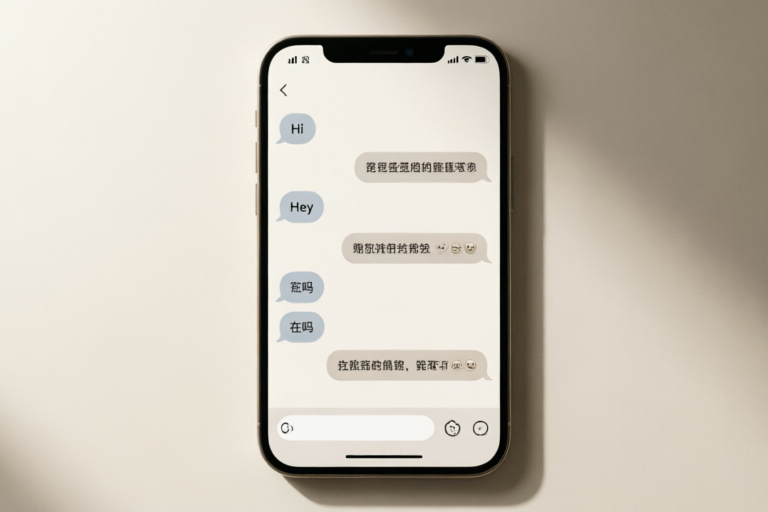
In the digital age of dating, the initial message holds immense power. It sets the tone for the entire interaction. Yet, many people find themselves stuck in a cycle of boring exchanges that fizzle out almost as quickly as they begin. You know the feeling: you send a thoughtful message, hoping for a spark, only to receive a monosyllabic \"K\" or \"Thanks\" back. Or worse, you find yourself receiving the dreaded generic opener: \"Hey,\" \"Hi,\" or \"What's up?\"
These types of messages are often sent by users who haven't spent time thinking about their approach. They are low-effort broadcastings designed to capture attention with minimum energy. While they aren't necessarily malicious, they lack the curiosity and emotional investment needed to build a genuine connection. If you have been wondering how to break this cycle and respond effectively, you are in the right place.
The goal isn’t to overcomplicate things or act like a pickup artist. Instead, the objective is to demonstrate high value through authenticity, wit, and attentiveness. This guide will walk you through the essential steps to reply to generic greetings without boring her, transforming a mundane \"hey\" into a compelling narrative that keeps the conversation flowing. We will delve into the psychology behind these interactions, learn how to personalize your replies, craft engaging questions, inject humor, and maintain a balanced dynamic. By the end of this article, you will be equipped with the tools to turn every interaction into an opportunity to connect on a deeper level.
## Understanding Why Generic Greetings Feel Boring
To solve the problem, we must first understand the root cause. Why does a simple \"Hey\" feel so unappealing to receive?
### The Psychology of the \"Hey\"
Generic openers like \"Hey\" or \"Hi\" are devoid of context. They function essentially as a digital knock on a door without any indication of who is standing outside or why they are there. From a psychological standpoint, human beings crave significance. When someone sends a message, we instinctively analyze the effort put into that communication. A generic greeting signals low effort. It suggests that the sender viewed you as interchangeable among hundreds of other matches, rather than an individual with unique traits that sparked interest.
This lack of specificity triggers a defensive mechanism in the recipient. The brain scans for cues of intent and personality. When those cues are missing, the mind categorizes the message as \"spam-like\" or \"low priority.\" Consequently, the response tends to mirror that low priority. You get a \"Hey\" back because you were met with a \"Hey.\"
Furthermore, generic greetings fail to spark curiosity. A great opening line poses a question, makes an observation, or offers a playful challenge that begs for a reply. \"Hey\" does neither. It places the burden entirely on the receiver to figure out how to proceed, creating friction in the communication flow. In a landscape where attention spans are shrinking and options are abundant, friction is the enemy of engagement.
### Why They Fail to Spark Curiosity
When you receive \"Hey,\" the mental load shifts entirely to you to carry the conversation. Unless you are exceptionally charismatic or fortunate enough to know exactly what to say, the natural reaction is often a polite but disinterested return greeting. This creates a \"chat wall\" effect where both parties are waiting for the other to say something substantial. Over time, this silence speaks volumes. It implies a lack of passion or knowledge about the other person.
Additionally, generic greetings demonstrate a failure to do the basic homework required in modern dating. Before typing \"Hey,\" a sender could easily look at a profile photo, read a bio, or notice a shared interest. Skipping this step indicates a lack of genuine interest. It tells her, \"I messaged everyone,\" rather than \"I messaged you.\"
Understanding this dynamic is the first step toward change. By avoiding the generic loop, you immediately position yourself as someone who pays attention, someone who invests effort, and someone who understands social nuance. This distinction alone can separate you from 80% of the competition waiting for a response to their own \"Hi.\"
## Personalizing Your Response Based on Her Profile
Once you realize that \"Hey\" is a missed opportunity, the solution lies in personalization. Even if she starts with a generic greeting, your response is your chance to pivot the conversation back to the details she chose to share. This shows you are actually looking at her profile and seeing her as a real person.
### Referring to Photos and Bios
The most effective way to personalize a reply is to reference specific elements found in her Instagram feed, Tinder profile, or Bumble bio. Look for tangible anchors: a dog, a hiking trail, a food dish, a travel destination, or a band sticker. These elements serve as hooks for conversation.
If her profile features a photo of her hiking with a beautiful view, do not simply say \"Cool hike.\" Instead, try:\n\n> \"That mountain view is incredible! Are you planning another trip soon, or did you just stumble upon that spot?\"
This approach works because it validates her interests. People love talking about things they are passionate about. By anchoring your response to her content, you create an immediate bridge. It signals that you read her bio and weren’t just scanning faces.
### Creating a Unique Conversation Hook
When she replies with \"Hey\" after you've matched, you still have the initiative. You can choose to acknowledge her message but immediately follow it up with your personalized hook. This prevents the \"Hello, how are you?\" ping-pong match.
Example scenario: She has a bio that mentions she loves spicy sushi.
**Generic Reply:** \"Hey, how are you?\"
**Winning Reply:** \"Hey! I noticed in your bio you love spicy sushi. Question of importance: Is the extra heat worth the risk, or is your stomach paying the price for bravery?\"
Notice the structure: acknowledgment of the greeting + reference to profile detail + open-ended question with a touch of playfulness. This combination moves the conversation away from small talk and into territory that reveals personality.
Even if her profile is sparse, there are always angles. Does she mention a hobby like painting? Ask about her favorite color palette. Does she list a university? Ask about campus life memories. The key is to show curiosity. When you personalize, you are no longer treating her like a database entry; you are treating her like a human being you want to get to know. This shift in energy is palpable and often invites her to reciprocate with similar depth.
## Crafting Open-Ended Questions for Deeper Conversations
Questions are the engines of conversation. However, most people ask the wrong kind of questions. Closed questions yield closed answers, killing momentum. Open-ended questions invite storytelling, emotion, and expansion.
### The Trap of Yes-or-No Answers
Consider the difference between \"Do you like music?\" and \"What kind of music gets you moving on a Friday night?\" The first question can be answered with \"Yes,\" and the conversation stalls. The second requires an explanation of preference and lifestyle.
Generic responses to \"Hey\" often lead straight into this trap. \"Hey, how was your day?\" is better than \"Hey,\" but \"What happened today?\" is still a bit dry. It invites factual reporting rather than emotional sharing.
### Inviting Storytelling and Emotion
To spark a deep conversation, frame your questions around feelings, experiences, or preferences. Use phrases like \"Tell me about...\" or \"What was the story behind...\" or \"How did it feel when...\"
Instead of asking \"Did you have a good weekend?\", ask \"Did you manage to escape the city this weekend, or did you treat yourself to some local adventures?\"
Instead of asking \"Do you have siblings?\", ask \"Is there anything you learned about yourself growing up with a sibling, or are you the only one in charge?\"
These types of inquiries allow her to share anecdotes. Anecdotes contain details. Details create intimacy. When she shares a story, you gain insight into her world, her humor, and her perspective. It transforms the chat from an interrogation into a shared experience.
**Practical Examples of Open-Ended Transitions:**
* **Bad:** \"Hey. Working?\"
* **Better:** \"Hey. Busy week ahead or trying to sneak in some rest?\"
* **Best:** \"Hey! I’m trying to decide if I should order coffee or tea. I’m leaning toward tea for the vibes. What’s your go-to drink when you’re powering through a busy Tuesday?\"
Notice how the best option adds context (your choice) and asks for her input on a relatable topic. It lowers the barrier to entry and makes answering feel easy and fun.
## Injecting Humor and Playful Teasing
Humor is often the quickest route to attraction. It demonstrates intelligence, confidence, and the ability to read a situation without taking everything too seriously. However, humor in texting requires nuance. You cannot rely on punchlines; you must rely on tone and context.
### Techniques for Adding Wit
Playful teasing involves gently poking fun at something non-controversial. It creates a \"push-pull\" dynamic that builds tension and rapport. If she says \"Hey\" with no context, a witty response acknowledges the bluntness of it.
* **The Observation Approach:** \"Hey! Direct to the point. I like efficiency. Just like my morning coffee.\"
* **The Exaggeration Approach:** \"Ah, the mysterious \"Hey.\" Did you lose your keyboard, or do you save emojis for special occasions?\"
These responses soften the interaction. They show you aren’t threatened by the generic nature of the text but are amused by it. Laughter releases dopamine, which positively associates you with her mood. When she laughs at your text, she associates you with pleasure.
### Lightness vs. Offensiveness
The line between teasing and insulting is thin. Never tease about appearance, background, or insecurities. Always target shared situations, obvious facts, or playful assumptions.
* **Safe:** \"So you’ve decided to grace us with your presence after sending a one-word message. I accept your apology.\"
* **Risky:** \"You look tired. Did you stay up playing games?\"
Keep it lighthearted. The goal is to make her smile, not to make her feel criticized. If you sense she isn’t responding well to humor, dial back and return to direct, friendly conversation. Flexibility is key.
## Balancing Questions with Shared Experiences
A common mistake men make is turning a flirtatious chat into a job interview. Rapid-fire questioning puts her on the spot and feels exhausting. To avoid this, balance your inquiries with statements about yourself.
### Avoiding Interview Mode
Interview mode happens when the conversation looks like this:
> Him: \"Where are you from?\"
> Her: \"Chicago.\"
> Him: \"What’s your job?\"
> Her: \"I’m a nurse.\"
This drains the energy. Both parties are working hard to gather information rather than enjoying the connection. To fix this, adopt a \"Share to Ask\" rule. For every question you ask, offer a piece of information about yourself.
### Maintaining Reciprocal Energy
Sharing relevant snippets alongside your inquiries normalizes the exchange. It makes the conversation feel like two friends catching up, not two strangers filling out forms.
**Example Swap:**
* **Interview Style:** \"What movie did you watch recently?\"
* **Balanced Style:** \"I just re-watched Inception for the third time. Still can’t explain the ending to myself. Have you seen it, or are you currently watching something that leaves you confused?\"
Here, you shared your activity (Inception), admitted a personal quirk (can’t explain it), and then invited her into that same frame. It builds reciprocity.
### Building Momentum Through Vulnerability
Appropriate vulnerability signals trust. Admitting when you made a mistake, or sharing a funny embarrassing moment, humanizes you. It tells her that it’s safe to be real. If you start overly confident but never vulnerable, you seem fake. If you are too vulnerable too soon, you seem needy. Find the sweet spot of \"confident vulnerability.\"
For example, admitting \"I tried cooking last night and accidentally burned the kitchen down\" is better than pretending you are a Michelin star chef. It’s relatable and funny.
## Conclusion: Focus on Connection Rather Than Performance
As we conclude, remember that the ultimate goal of any reply strategy is connection, not performance. Many men approach texting as a puzzle to be solved or a technique to master. While techniques like personalization, humor, and open-ended questions are valuable tools, they are secondary to authenticity.
### Summary of Core Strategies
We have covered several critical pillars:
1. **Understand the Psychology:** Generic greetings signal low effort and trigger disinterest.
2. **Personalize:** Reference photos, bios, and shared details to show attentiveness.
3. **Ask Open-Ended Questions:** Encourage storytelling and emotion instead of yes/no answers.
4. **Use Humor:** Add wit and playfulness to lower defenses and build rapport.
5. **Balance the Exchange:** Share about yourself to avoid the interrogation trap.
By integrating these elements, you create a conversation ecosystem where she feels understood, entertained, and intrigued.
### Prioritizing Authenticity and Confidence
However, the best technology in the world cannot fix a mindset that lacks confidence. Be willing to be imperfect. If you send a joke and she doesn’t laugh, move on gracefully. If you get nervous, admit it. Authenticity resonates louder than polished scripts.
Confidence comes from knowing your value. You are not begging for her attention; you are offering yours to someone interesting. If she doesn’t reciprocate, you are not losing a prize; you have simply filtered out a mismatch. This mindset frees you to text freely and genuinely, without the anxiety that leads to generic \"Hey\" loops.
### Final Encouragement
Every text conversation is a blank page. With the strategies outlined above, you hold the pen. Stop settling for \"Hey\" responses that drain your energy. Challenge yourself to find the spark in every profile, to craft the question that invites a story, and to bring a smile to her face with every keystroke. Start applying these principles today. The next message you send isn’t just a notification; it’s an invitation to a story worth telling. Go forth and connect.
Comments

bored_of_benches
tried the balanced approach question + personal snippet and wow feels way more natural
👍 19👎 0

tech_savvy_guy
great breakdown but tl;dr i think authenticity matters most honestly
👍 20👎 0

just_want_love
simple suggestion: ask about their coffee order instead of how was your day
👍 27👎 0

alex_d
used the humor approach but worried it came off dry maybe im bad at jokes ngl
👍 25👎 0

lost_at_sea
the part about avoiding interview mode really hit home. so bored of yes/no questions now
👍 2👎 0
chat_god_99
stop overthinking man send a funny meme sometimes lol
👍 16👎 0

sarah_vibes
wait does this work if you dont know her at all or just when she already said hi
👍 26👎 0

mike_in_tx
tried the photo hook thing from section 2 today literally changed everything she was chatting for 20 mins
👍 14👎 0