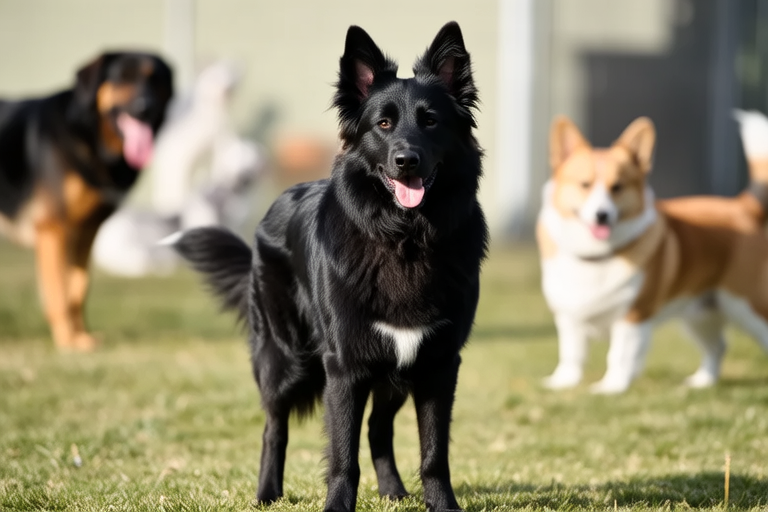
German Shepherds Compared to Other Popular Dog Breeds
When considering adopting a new canine companion, many people look at popular breeds like Labrador Retrievers, Golden Retrievers, Border Collies, and Beagles. Each breed has its own set of unique traits that make it suitable for different types of homes and lifestyles. Among these, the German Shepherd stands out due to its remarkable intelligence, loyalty, versatility, and physical prowess. This article will compare German Shepherds with other popular dog breeds, highlighting the unique characteristics that make them stand out.
Intelligence and Loyalty
German Shepherds are often considered one of the most intelligent dog breeds. They rank fourth on Stanley Coren’s list of the most intelligent dogs, just behind Border Collies, Poodles, and Australian Shepherds. Their high level of intelligence makes them highly trainable and capable of understanding complex commands. This trait is particularly beneficial for those looking for a dog that can be trained for specific tasks or roles, such as service dogs or police work.
In addition to their intelligence, German Shepherds are known for their loyalty. They form strong bonds with their owners and are often protective of their families. This combination of intelligence and loyalty makes them excellent companions for individuals or families seeking a dog that can provide both emotional support and practical assistance.
Versatility in Roles
One of the reasons why German Shepherds are so popular is their versatility. They excel in various roles, including service dogs, police work, and military operations. Their ability to learn and perform complex tasks makes them ideal candidates for these professions. For example, German Shepherds are commonly used as guide dogs for the visually impaired, search and rescue dogs, and bomb-sniffing dogs. In addition, they are frequently employed by law enforcement agencies as patrol dogs, drug detection dogs, and cadaver dogs.
Compared to other breeds, German Shepherds have an edge when it comes to versatility. While breeds like Labrador Retrievers and Golden Retrievers are also intelligent and trainable, they may not possess the same level of versatility as German Shepherds. For instance, while Labrador Retrievers are excellent therapy dogs and family pets, they are less commonly used in police work or military operations. Similarly, while Border Collies are highly intelligent and trainable, their primary role is herding livestock, which limits their versatility in other areas.
Physical Attributes
German Shepherds are large, muscular dogs with a distinctive appearance. They typically weigh between 50 and 90 pounds and stand 22 to 26 inches tall at the shoulder. Their double coat is dense and weather-resistant, providing protection from harsh climates. The coat color can vary, but the most common colors are black and tan or all-black.
Compared to other breeds, German Shepherds are larger and more muscular than breeds like Beagles, which typically weigh between 22 and 30 pounds and stand 13 to 15 inches tall at the shoulder. However, German Shepherds are smaller and less stocky than breeds like Rottweilers, which can weigh up to 130 pounds and stand 24 to 27 inches tall at the shoulder. Despite their size, German Shepherds are agile and athletic, making them well-suited for activities like agility training and obedience competitions.
Common Health Issues
Like all dog breeds, German Shepherds are prone to certain health issues. Some of the most common health problems include hip dysplasia, elbow dysplasia, and degenerative myelopathy. Hip dysplasia is a condition where the hip joint does not develop properly, leading to pain and mobility issues. Elbow dysplasia is similar, but it affects the elbow joint instead of the hip joint. Degenerative myelopathy is a progressive disease that affects the spinal cord and can lead to paralysis.
Compared to other breeds, German Shepherds are more susceptible to hip and elbow dysplasia than breeds like Labrador Retrievers and Golden Retrievers. However, they are less likely to develop certain conditions that affect smaller breeds, such as patellar luxation, which is common in breeds like Chihuahuas and Yorkshire Terriers. It is important for potential owners to research the health history of their prospective German Shepherd and to consult with a veterinarian about preventative measures and treatment options.
Grooming Needs
German Shepherds have a thick, double coat that requires regular grooming to prevent matting and tangling. They shed heavily twice a year during shedding season, and they require daily brushing during this time to remove loose fur. In addition to regular brushing, German Shepherds may need occasional baths to keep their coat clean and healthy.
Compared to other breeds, German Shepherds have more intensive grooming needs than breeds like Beagles, which have shorter coats that require less frequent brushing. However, German Shepherds have fewer grooming needs than breeds like Samoyeds, which have long, fluffy coats that require daily brushing and frequent bathing. Proper grooming is essential for maintaining the health and appearance of a German Shepherd’s coat, and it can also help reduce shedding and dander, which is beneficial for allergy sufferers.
Temperament
German Shepherds are known for their confident and courageous demeanor. They are protective of their families and can be wary of strangers, making them excellent guard dogs. However, they are also affectionate and loyal to their owners, and they enjoy spending time with their human companions. German Shepherds are generally good with children, but they may be too rambunctious for very young children.
Compared to other breeds, German Shepherds have a more reserved and cautious temperament than breeds like Labrador Retrievers and Golden Retrievers, which are known for their friendly and outgoing personalities. However, German Shepherds are more confident and assertive than breeds like Basset Hounds and Beagles, which are known for their laid-back and easygoing nature. It is important for potential owners to consider the temperament of a German Shepherd and to ensure that they are prepared to provide proper socialization and training to prevent aggression or fearfulness.
Training Requirements
German Shepherds are highly trainable dogs that respond well to positive reinforcement techniques. They thrive on structure and routine and benefit from consistent training and socialization. However, German Shepherds can be independent thinkers, and they may challenge their owners if they sense weakness or inconsistency. Therefore, it is important for owners to establish themselves as pack leaders and to provide clear and consistent guidance.
Compared to other breeds, German Shepherds have more demanding training requirements than breeds like Beagles and Basset Hounds, which are known for their independent and stubborn nature. However, German Shepherds have fewer training challenges than breeds like Greyhounds and Whippets, which are known for their aloof and distant personality. Proper training is essential for ensuring that a German Shepherd behaves appropriately in public settings and around other animals.
Compatibility with Families
German Shepherds are generally good with families, especially families with older children who understand how to interact with a large, energetic dog. They are protective of their families and can be excellent guard dogs. However, they may be too rambunctious for very young children, and they require plenty of exercise and mental stimulation to prevent boredom and destructive behavior.
Compared to other breeds, German Shepherds are better suited for families with older children than breeds like Great Danes, which are too large and clumsy for young children. However, German Shepherds may be too energetic for families with sedentary lifestyles or small living spaces. For families looking for a more laid-back and low-maintenance dog, breeds like Bulldogs or French Bulldogs may be a better fit.
Scenarios for Choosing a German Shepherd
Apartments
German Shepherds are not ideal for apartment living due to their size, energy levels, and exercise requirements. They need plenty of space to run and play, and they may become restless and destructive if they do not receive adequate exercise. For apartment dwellers, smaller breeds like Dachshunds or Chihuahuas may be a better fit.
Active Outdoor Lifestyles
German Shepherds are excellent companions for individuals with active outdoor lifestyles. They enjoy hiking, running, and playing fetch, and they are well-suited for activities like agility training and obedience competitions. For those looking for a dog that can accompany them on outdoor adventures, German Shepherds are an excellent choice.
Households with Children
German Shepherds are generally good with children, but they may be too rambunctious for very young children. They are protective of their families and can be excellent guard dogs. For families with older children who understand how to interact with a large, energetic dog, German Shepherds can be wonderful companions.
Conclusion
German Shepherds are a versatile and intelligent breed that excels in various roles, including service dogs, police work, and military operations. Their loyal and protective nature makes them excellent companions for families, and their high energy levels make them well-suited for active outdoor lifestyles. While they have some drawbacks, such as intensive grooming needs and training requirements, they are a rewarding breed for those who are willing to put in the effort. When compared to other popular dog breeds, German Shepherds stand out due to their intelligence, loyalty, versatility, and physical prowess.
