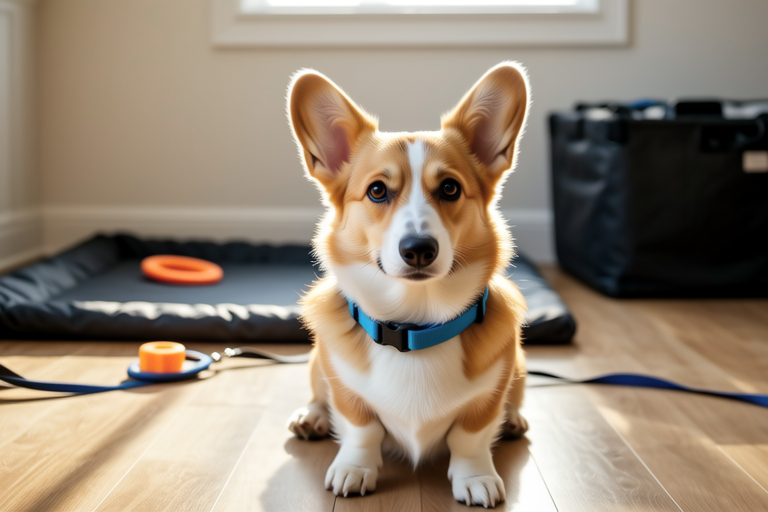
How to Train Your Corgi Like a Pro in Just 7 Days
Welcome to your comprehensive guide on training your Corgi in just one week! This article is designed to help you establish a strong bond with your furry friend while teaching them essential behaviors. Each day focuses on specific aspects of training, from basic obedience to addressing common behavioral issues. We’ll emphasize positive reinforcement methods, ensuring that both you and your Corgi have fun during the process.
Day 1: Introduction to Positive Reinforcement and Basic Commands
On the first day, introduce your Corgi to the concept of positive reinforcement. This method involves rewarding good behavior rather than punishing bad behavior. Start by teaching simple commands like ‘sit’, ‘stay’, and ‘come’. Use treats as rewards when your Corgi follows a command correctly. For example, if your Corgi sits on command, immediately give them a treat and praise them warmly. This immediate reward strengthens the association between the command and the action.
Day 2: Potty Training Basics
Today, focus on potty training your Corgi. Establish a routine for taking your Corgi outside at regular intervals, especially after meals or naps. Choose a specific spot in your yard or a nearby park where you want your Corgi to relieve themselves. Whenever they go to the bathroom in the designated area, praise them enthusiastically and offer a small treat. Be patient; accidents will happen, but consistency is key.
Day 3: Socialization Techniques
Socialization is crucial for your Corgi’s development. Today, expose your Corgi to different environments, people, and other animals. Start in a controlled setting, such as a friend’s house with a calm, friendly dog. Gradually increase exposure to more stimulating environments. Always ensure your Corgi feels safe and comfortable. Positive interactions with new people and pets will help prevent fear-based aggression later.
Day 4: Advanced Obedience Training
Build on yesterday’s progress by refining your Corgi’s obedience skills. Practice longer ‘stay’ commands and introduce ‘down’ and ‘heel’. Use treats and verbal praise to encourage compliance. For instance, when teaching ‘heel’, walk beside your Corgi and gently pull the leash towards their side while saying the command. When they move into position, reward them instantly.
Day 5: Addressing Common Behavioral Issues
Today, address any behavioral issues your Corgi might be exhibiting. If your Corgi is overly excited, practice calming exercises. Teach them to sit and stay calmly before being allowed to greet visitors. If chewing is a problem, provide appropriate chew toys and redirect your Corgi’s attention whenever they start chewing on something they shouldn’t. Consistency and patience are vital in these situations.
Day 6: Fun and Games: Incorporating Training into Playtime
Incorporate training into playtime to keep things exciting for both you and your Corgi. Play fetch, but only throw the ball after your Corgi performs a command. This way, your Corgi learns that following commands leads to fun activities. You can also teach tricks like ‘shake hands’ or ‘spin’ using treats and positive reinforcement.
Day 7: Review and Refinement
The final day is dedicated to reviewing everything you’ve learned throughout the week. Spend time practicing all the commands and behaviors you’ve taught your Corgi. Pay special attention to areas where your Corgi may still struggle. Remember, training is an ongoing process, and even well-trained dogs need occasional refresher sessions.
Additional Tips for Novice and Experienced Handlers
For novice handlers, remember that consistency is key. Stick to a routine and always use the same commands for each behavior. For experienced handlers, consider introducing more complex commands or agility training to challenge your Corgi further. Regardless of experience level, always maintain a positive attitude and keep training sessions short and enjoyable.
Real-Life Examples
Let’s take a look at some real-life scenarios. Sarah adopted a Corgi named Max who had trouble sitting still during walks. By practicing ‘heel’ and ‘stay’ commands during short walks, Max learned to walk calmly beside Sarah. Another owner, John, found that his Corgi, Bella, would jump up on guests. John taught Bella to sit and wait before greeting visitors, and now Bella greets everyone politely.
Conclusion
Training your Corgi can be an incredibly rewarding experience. By following this seven-day plan, you’ll build a strong foundation of trust and communication with your pet. Remember, every Corgi is unique, so tailor the training to suit your individual dog’s needs. With patience, consistency, and lots of love, you and your Corgi will be well on your way to becoming a pro training team.
