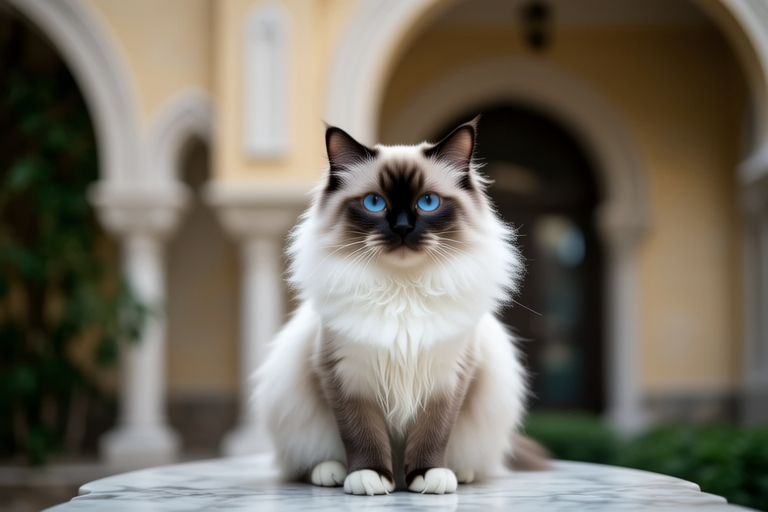
The Turkish Angora: A Timeless Feline Companion
The Turkish Angora, with its regal bearing and striking beauty, has captivated hearts for centuries. This breed’s origins trace back to ancient Turkey, where it has been revered as a symbol of elegance and grace. Known for its long, silky coat, large, expressive eyes, and graceful movements, the Turkish Angora stands out among other cat breeds. Its history is intertwined with Turkish culture, legends, and mythology, making it more than just a pet but a cultural icon.
History and Origin
The Turkish Angora has a rich history that spans thousands of years. It is believed to have originated in the Ankara region of central Anatolia, which was once known as Angora. The breed is mentioned in historical texts dating back to the 16th century, when it was brought to Europe by traders and diplomats. The first recorded mention of the Turkish Angora in Europe is in the writings of French naturalist Etienne Geoffroy Saint-Hilaire, who described the breed in his work “Histoire Naturelle des Mammifères” published in 1810.
During the Ottoman Empire, the Turkish Angora was highly valued and kept in royal harems. The breed was so cherished that the government established a breeding program in the early 20th century to preserve the pure lineage of these cats. This program was housed at the Ankara Zoo, where strict regulations were enforced to ensure the purity of the breed. Today, the Turkish Angora remains one of the most recognized and beloved cat breeds in Turkey and around the world.
Elegant Appearance and Distinctive Features
The Turkish Angora is renowned for its elegant appearance, which is characterized by a slender, muscular body, a graceful neck, and long, flowing fur. The breed comes in a wide variety of colors, including white, black, blue, red, and cream, as well as patterns such as tabby, tortoiseshell, and bi-color. One of the most distinctive features of the Turkish Angora is its large, almond-shaped eyes, which can be blue, green, or gold, depending on the color of the coat. These captivating eyes give the breed an almost mystical appearance.
The Turkish Angora’s long, silky coat requires minimal grooming, but it does shed seasonally. Owners should brush their cats regularly to prevent matting and keep their coats looking their best. Despite its luxurious appearance, the Turkish Angora is not a hypoallergenic breed, so those with allergies may experience some discomfort when handling the cat.
Graceful Movements and Temperament
The Turkish Angora is known for its graceful and agile movements, which are a result of its strong, athletic build. These cats are highly intelligent and curious, often exploring their surroundings with great enthusiasm. They are also very active and require plenty of stimulation to stay happy and healthy. Owners should provide their Turkish Angoras with toys, scratching posts, and other forms of enrichment to keep them engaged and entertained.
In terms of temperament, the Turkish Angora is generally friendly, affectionate, and social. They enjoy interacting with their owners and are often found perched on laps or following their humans around the house. However, they can also be independent and may not always seek constant attention. This makes them ideal companions for individuals who appreciate a cat that is both affectionate and self-sufficient.
Turkish Culture and Myths
The Turkish Angora holds a special place in Turkish culture, where it is considered a symbol of elegance and grace. In Turkish mythology, the breed is associated with the goddess Cybele, who was worshipped as the mother of all gods and protector of animals. According to legend, Cybele’s sacred animal was a white cat with blue eyes, which is believed to be the ancestor of the Turkish Angora. This connection between the breed and the goddess has contributed to its status as a cultural icon in Turkey.
Another popular myth about the Turkish Angora involves the belief that the breed possesses healing powers. It is said that the presence of a Turkish Angora in a sickroom can help speed up recovery and bring good fortune to the patient. While there is no scientific evidence to support this claim, many people in Turkey still believe in the healing power of these cats and consider them to be lucky omens.
Genetic Traits and Health Considerations
The Turkish Angora is a relatively healthy breed, but like all cats, it is susceptible to certain genetic conditions. One of the most common health issues affecting the breed is hypertrophic cardiomyopathy (HCM), a heart condition that can lead to sudden death if left untreated. Owners should have their cats examined by a veterinarian regularly to monitor for signs of HCM and other potential health problems.
Another genetic trait that sets the Turkish Angora apart from other cat breeds is its heterozygous gene for hairlessness. This means that while most Turkish Angoras have long, luxurious coats, there is a small percentage of the breed that is born without fur. These cats are known as “hairless” Turkish Angoras and are considered rare and valuable. However, due to their lack of fur, they require extra care to protect their skin from sun damage and other environmental factors.
Care Requirements and Maintenance
Despite its luxurious coat, the Turkish Angora requires minimal grooming. Regular brushing will help remove loose hairs and prevent matting, but excessive grooming is not necessary. Owners should also pay attention to the cat’s dental hygiene, providing regular brushing and dental treats to maintain healthy teeth and gums. Additionally, it is important to provide the Turkish Angora with a balanced diet that meets its nutritional needs. Consultation with a veterinarian is recommended to determine the appropriate diet based on the cat’s age, weight, and activity level.
Notable Stories and Mentions
The Turkish Angora has been mentioned in various works of literature and art throughout history. In the novel “The White Cat” by Rudyard Kipling, the protagonist is a white cat with blue eyes, believed to be inspired by the Turkish Angora. The breed has also appeared in several films and television shows, including “The Cat Returns,” a Japanese animated film that features a Turkish Angora as one of the main characters.
In addition to its appearances in media, the Turkish Angora has also played a role in scientific research. In the 1940s, a group of scientists at the University of California, Berkeley conducted experiments using Turkish Angoras to study genetics and inheritance. Their findings helped advance our understanding of how certain traits are passed down through generations and laid the foundation for modern genetic research.
A Prized Companion
The Turkish Angora is considered a prized companion due to its unique combination of beauty, intelligence, and affection. Its elegant appearance and graceful movements make it a standout among other cat breeds, while its friendly and social nature makes it an ideal companion for individuals and families alike. Whether you’re a seasoned cat owner or new to the world of felines, the Turkish Angora is sure to captivate your heart and become a beloved member of your household.
