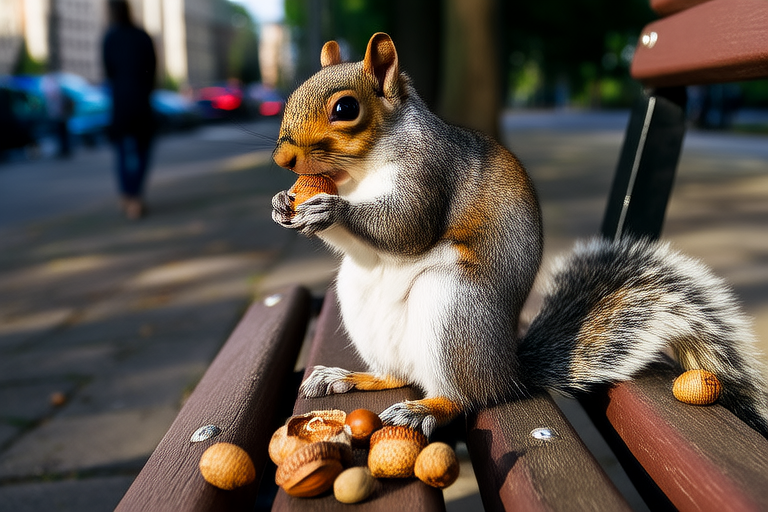
Urban Squirrels: Navigating the City Life
In the bustling heart of cities, where towering skyscrapers reach towards the sky and concrete jungles stretch as far as the eye can see, a small but resilient creature thrives – the urban squirrel. These adaptable rodents have made themselves at home in the most unexpected places, showcasing remarkable behaviors, adaptations, and survival strategies. From finding food amidst urban development to interacting with city dwellers, urban squirrels have found unique ways to thrive in a world designed for humans.
Navigating Human-Made Structures
Urban squirrels, particularly the eastern gray squirrel (Sciurus carolinensis), have mastered the art of moving through human-made structures. They are adept climbers, capable of scaling buildings, trees, and even utility poles with ease. Their sharp claws provide them with the necessary grip to traverse narrow ledges and slippery surfaces. Squirrels also make use of man-made features such as balconies, rooftops, and fire escapes to travel between different areas of the city. By weaving through these structures, they avoid ground-level dangers like traffic and predators, ensuring their safety while expanding their territory.
Finding Food Sources Amidst Urban Development
The availability of food is crucial for any animal’s survival, and urban squirrels have developed various strategies to locate sustenance in the midst of urban development. While natural food sources like nuts and seeds may be scarce, squirrels have learned to exploit human activities for nourishment. They are known to scavenge for discarded food in parks, backyards, and garbage bins. Additionally, many cities offer designated feeding stations where residents can leave out food specifically for squirrels. These stations provide a reliable source of sustenance, though they can sometimes lead to overcrowding and increased competition among squirrels.
Urban squirrels also take advantage of ornamental plants and trees planted throughout the city. Many homeowners and city planners incorporate native vegetation into urban landscapes, providing squirrels with a steady supply of acorns, walnuts, and other edible fruits. However, some non-native plants may also become part of the squirrels’ diet, indicating their ability to adapt to new food sources. In addition to plant-based foods, squirrels have been observed consuming insects, bird eggs, and even small vertebrates when given the opportunity.
Interacting with City Dwellers
One of the most intriguing aspects of urban squirrels is their interaction with city dwellers. Many people enjoy watching these playful creatures and often leave out food for them. This mutual relationship has led to a unique dynamic between squirrels and humans. Some squirrels have become so accustomed to human presence that they will approach people directly, seeking handouts or simply curious about their surroundings. This behavior has earned them the nickname “city pets” among locals.
However, this close proximity to humans also poses risks for squirrels. While many people mean well, others may unintentionally harm them by feeding them inappropriate foods or disturbing their habitats. It is important for city dwellers to understand the proper way to interact with squirrels and to respect their space. Providing nutritious food options, such as unsalted nuts and seeds, and avoiding contact with sick or injured animals are essential steps in maintaining a healthy relationship between humans and squirrels.
Managing Risks from Predators and Traffic
Despite their adaptability, urban squirrels face numerous challenges in the city environment. One of the most significant threats comes from traffic. Squirrels must constantly be aware of vehicles when crossing roads, which can be particularly dangerous during busy times. To mitigate this risk, squirrels have developed specific behaviors, such as waiting for gaps in traffic before crossing and using curbs and medians as safe paths. However, accidents still occur, and it is not uncommon to see squirrels hit by cars.
Predation is another challenge faced by urban squirrels. While natural predators like birds of prey and foxes are less common in urban areas, domestic cats and dogs pose a significant threat. Squirrels have adapted to these dangers by becoming more vigilant and cautious. They rely on their keen senses to detect potential threats and will quickly retreat to higher ground if they sense danger. Additionally, squirrels have been observed forming social groups, which may provide protection against predators.
Unique Challenges and Opportunities
The urban environment presents both challenges and opportunities for squirrels. On one hand, the abundance of human-made structures and food sources provides squirrels with ample resources. On the other hand, the presence of traffic, predators, and environmental pollutants poses significant risks. Despite these obstacles, squirrels have proven to be remarkably resilient and resourceful. Scientific studies and observations have shed light on their secret life among city chaos, revealing fascinating insights into their behavior and adaptations.
For instance, researchers have found that urban squirrels exhibit distinct personalities, with some individuals being more adventurous and exploratory than others. This variation in behavior may contribute to their success in navigating the complex urban landscape. Additionally, studies have shown that squirrels living in urban areas tend to be larger and healthier compared to their rural counterparts, possibly due to the availability of diverse food sources. However, the long-term effects of urbanization on squirrel populations remain unclear, and ongoing research is needed to fully understand the impacts of city life on these adaptable creatures.
Conclusion
Urban squirrels are a testament to the resilience and resourcefulness of nature. Through their ability to navigate human-made structures, find food sources amidst urban development, and interact with city dwellers, these small creatures have carved out a niche for themselves in the heart of cities. While they face numerous challenges, including risks from predators and traffic, squirrels have adapted to their environment in remarkable ways. By studying their behaviors and adaptations, we gain valuable insights into the intricate balance between wildlife and urbanization. As cities continue to grow and evolve, it is essential to recognize and appreciate the role of urban squirrels in our shared urban ecosystems.
