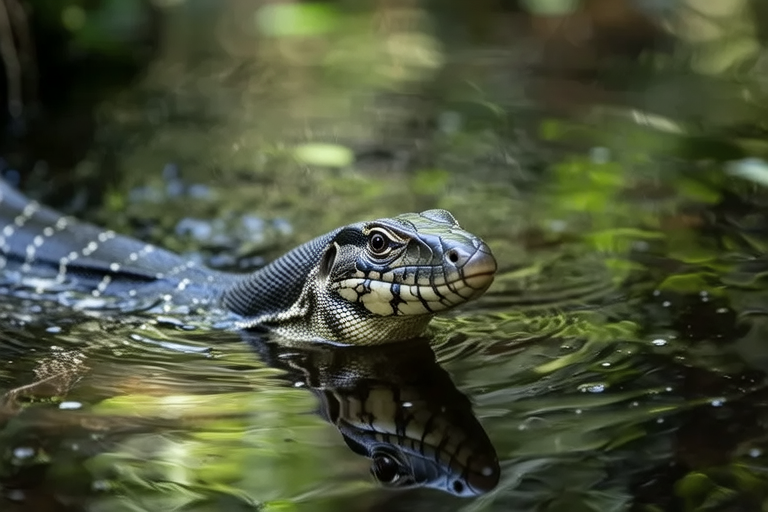
Unleashing the Secrets of the Water Monitor: Nature’s Aquatic Acrobat
The water monitor (Varanus salvator) is a remarkable reptile that has captivated the imagination of wildlife enthusiasts for centuries. Known for its extraordinary agility and adaptability, this species thrives in both terrestrial and aquatic environments, making it a true aquatic acrobat of the natural world. This article delves into the fascinating life of the water monitor, exploring its unique physical characteristics, behavior, diet, and habitat preferences. Additionally, we will discuss the challenges it faces in the wild and highlight ongoing conservation efforts.
Introduction to the Water Monitor
The water monitor, one of the largest lizards in the world, can grow up to 3 meters in length, though average adults are typically around 1.5 meters long. Their robust bodies are supported by powerful limbs, each ending in sharp claws, which they use to climb trees or dig into the ground. The water monitor’s skin is covered in tough scales, providing excellent protection against predators and harsh environmental conditions. These scales range in color from olive green to brown, often adorned with yellow or cream spots, creating a camouflage that helps them blend seamlessly into their surroundings.
Water monitors are native to Southeast Asia, where they inhabit a wide range of ecosystems, from dense tropical forests to coastal mangroves and freshwater wetlands. Their ability to thrive in such diverse habitats is due to their versatile adaptations, allowing them to move efficiently between land and water. In fact, these lizards are excellent swimmers, capable of holding their breath for extended periods, which aids in their hunting and escape strategies.
Physical Characteristics
The water monitor’s body is designed for both strength and speed. Its muscular tail acts as a rudder when swimming and as a weapon during territorial disputes or self-defense. The lizard’s keen eyesight allows it to spot prey from great distances, while its acute sense of smell helps it track down food even when visibility is poor. Equally impressive are its strong jaws, equipped with sharp teeth that can deliver a powerful bite, making it a formidable predator.
Despite its fearsome appearance, the water monitor is not without its vulnerabilities. Its large size and conspicuous movements make it an easy target for larger predators like crocodiles, pythons, and humans. However, the lizard’s agility and intelligence enable it to avoid most threats. For instance, when threatened, the water monitor can dive into water and remain submerged for up to 30 minutes, giving it ample time to escape danger.
Behavior and Hunting Techniques
Water monitors are active hunters, known for their opportunistic feeding habits. They are not picky eaters and will consume almost anything they can catch, including fish, frogs, birds, small mammals, and insects. Their hunting technique is a combination of stealth and speed. When stalking prey, the water monitor moves slowly and deliberately, relying on its camouflage to remain undetected. Once within striking distance, it lunges with surprising speed, catching its victim off guard.
In addition to being skilled hunters, water monitors play an important role in their ecosystem. By controlling populations of smaller animals, they help maintain a balanced environment. Furthermore, their habit of scavenging dead animals ensures that organic matter is recycled efficiently, contributing to nutrient cycling in the soil.
Diet and Habitat Preferences
The diet of a water monitor varies depending on its location and the availability of prey. In coastal areas, they primarily feed on crabs, mollusks, and other marine creatures, whereas inland monitors prefer fish, amphibians, and small mammals. Regardless of their preferred meal, water monitors are opportunistic feeders, taking advantage of whatever food sources are available.
Habitat preference also plays a significant role in determining the water monitor’s lifestyle. While some individuals may be found in densely forested regions, others prefer open grasslands or near riverbanks. Regardless of their chosen habitat, all water monitors require access to water for swimming and cooling down. This need for proximity to water bodies makes them particularly vulnerable to human activities that degrade or destroy wetland areas.
Threats in the Wild
Despite their widespread distribution across Southeast Asia, water monitors face numerous threats in the wild. Habitat destruction caused by deforestation, agricultural expansion, and urbanization has reduced the amount of suitable habitat available for these lizards. Moreover, overharvesting for the pet trade and traditional medicine markets poses another serious threat. Many people believe that parts of the water monitor possess medicinal properties, leading to unsustainable levels of exploitation.
Climate change is also affecting the water monitor population. Rising temperatures and altered rainfall patterns disrupt breeding cycles and reduce the availability of prey items. As a result, many populations are struggling to survive under these changing conditions. Conservationists are working hard to address these issues through various initiatives aimed at protecting remaining habitats and reducing poaching activities.
Conservation Efforts
To ensure the survival of this magnificent creature, several organizations have launched programs dedicated to conserving water monitor populations. One such initiative involves establishing protected areas where hunting and habitat destruction are prohibited. Another approach focuses on educating local communities about the importance of preserving these lizards and promoting sustainable practices that benefit both wildlife and people.
Understanding the water monitor is crucial for maintaining ecological balance. As apex predators within their ecosystems, they help regulate populations of smaller animals and contribute to overall biodiversity. By studying their behaviors and needs, scientists gain valuable insights into how different species interact within complex food webs. This knowledge can then be applied to develop more effective conservation strategies not only for water monitors but also for other threatened species.
Conclusion
The water monitor, with its impressive physical attributes and remarkable abilities, exemplifies nature’s ingenuity. From its sleek body design to its adept swimming skills, every aspect of this lizard contributes to its success as an aquatic acrobat. By learning more about this species, we gain a deeper appreciation for the intricate web of life that exists beneath our feet and in our waters. Let us continue supporting efforts to protect these incredible creatures so future generations can marvel at their splendor too.
