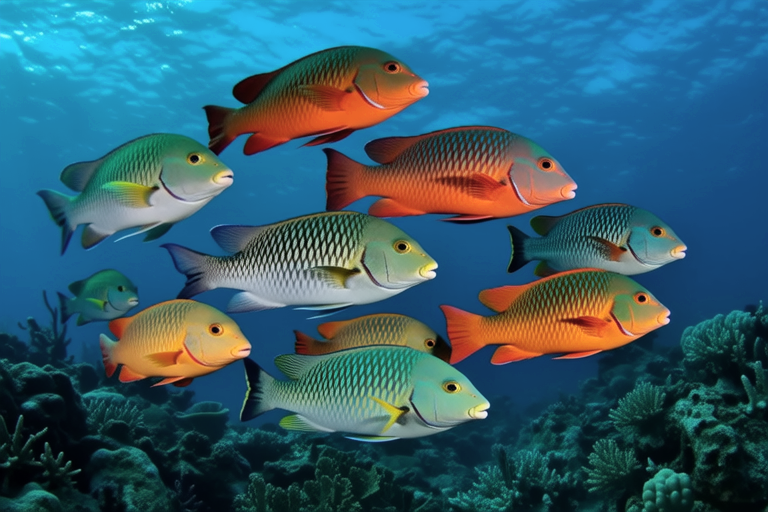
Top 10 Myths About Parrot Fish Debunked!
Parrot fish are among the most colorful and intriguing creatures found in coral reefs around the world. Their vibrant hues and unique behaviors make them a favorite subject for both marine enthusiasts and casual observers. However, many misconceptions exist regarding their behavior, diet, and role in marine ecosystems. Understanding these myths and replacing them with accurate information is crucial for effective marine conservation efforts and responsible aquarium practices. This article aims to debunk ten common myths about parrot fish, providing clarity and fostering a deeper appreciation for these fascinating marine inhabitants.
Myth 1: Parrot Fish Eat Coral and Destroy Reefs
What the Myth Suggests: Many believe that parrot fish are voracious predators that consume coral, leading to reef destruction.
Why It’s Incorrect: While it’s true that parrot fish feed on algae that grow on coral surfaces, they do not directly consume coral polyps. Instead, they play a vital role in maintaining the health of coral reefs by controlling algal growth.
Factual Information: Research indicates that parrot fish help prevent algae from overwhelming coral reefs, which can be detrimental to the reef’s overall health. A study published in the journal Science revealed that parrot fish contribute significantly to the reef’s resilience against environmental stressors by keeping algae in check. Thus, far from being reef destroyers, they are essential contributors to reef maintenance.
Myth 2: All Parrot Fish Are the Same Color
What the Myth Suggests: The misconception exists that all parrot fish have the same bright, uniform coloration.
Why It’s Incorrect: In reality, parrot fish exhibit a wide range of colors and patterns, varying greatly between species and even within species depending on age and sex.
Factual Information: There are over 90 recognized species of parrot fish, each displaying unique and vibrant colorations. For instance, the Queen parrot fish has a striking red and yellow hue, while the Blue-green parrot fish boasts a more subdued palette. These variations serve different purposes, such as camouflage, attracting mates, and warding off predators.
Myth 3: Parrot Fish Can Change Gender
What the Myth Suggests: Some believe that parrot fish can spontaneously change gender at will.
Why It’s Incorrect: While it’s true that some species of parrot fish can change gender, this process is not random or spontaneous but rather hormonally driven and linked to social structure.
Factual Information: Certain species of parrot fish exhibit sequential hermaphroditism, where individuals start as one sex and transition to the other. This transformation often occurs when a dominant male dies, allowing subordinate females to change into males to ensure reproductive continuity. This behavior is well-documented in species like the Blue parrot fish.
Myth 4: Parrot Fish Are Carnivorous
What the Myth Suggests: The belief persists that parrot fish primarily eat meat.
Why It’s Incorrect: Parrot fish are predominantly herbivores, feeding on algae and plant matter.
Factual Information: Scientific studies have shown that parrot fish have specialized teeth arranged in beak-like structures that allow them to scrape algae off rocks and coral. They also consume small amounts of coral polyp tissue incidentally, but their diet is mainly composed of algae. This dietary preference underscores their critical role in maintaining the ecological balance of coral reefs.
Myth 5: Parrot Fish Sleep with Their Eyes Open
What the Myth Suggests: An urban legend suggests that parrot fish sleep with their eyes open.
Why It’s Incorrect: Like most fish, parrot fish do not sleep with their eyes open. They have eyelids that close during rest periods.
Factual Information: Fish, including parrot fish, possess eyelids that protect their eyes from debris and other irritants. During sleep, these eyelids close to ensure the fish remains comfortable and protected. This misconception likely arises from the fact that some fish species, such as sharks, do not have eyelids and thus appear to sleep with their eyes open.
Myth 6: Parrot Fish Produce Sand
What the Myth Suggests: There’s a popular belief that parrot fish are responsible for producing sand through their digestion of coral.
Why It’s Incorrect: While parrot fish do ingest coral to reach the algae beneath its surface, the process of sand formation is more complex than simply digesting coral.
Factual Information: Parrot fish consume coral and excrete it as fine particles after digestion. Over time, these particles accumulate and contribute to the formation of sand. According to a study published in Biological Bulletin, one large parrot fish can produce up to 840 pounds of sand per year. This process highlights the significant ecological role parrot fish play in shaping tropical beaches.
Myth 7: Parrot Fish Are Harmless to Humans
What the Myth Suggests: The notion that parrot fish pose no threat to humans.
Why It’s Incorrect: While generally harmless, certain species of parrot fish can cause injury if provoked or handled improperly.
Factual Information: Parrot fish have strong jaws and sharp teeth designed for scraping algae from hard surfaces. If mishandled, these features can cause injury. Additionally, some species may exhibit defensive behaviors when threatened. It’s important for divers and aquarium hobbyists to respect the space and natural behaviors of these fish.
Myth 8: Parrot Fish Can Survive in Any Aquarium
What the Myth Suggests: The assumption that parrot fish can thrive in any home aquarium.
Why It’s Incorrect: Parrot fish have specific environmental requirements that must be met to ensure their health and survival in captivity.
Factual Information: Parrot fish require large, spacious tanks with ample swimming room, high water quality, and a suitable diet. They are sensitive to changes in water chemistry and temperature. Proper care involves providing hiding places and ensuring a balanced diet rich in algae and vegetable matter. Failure to meet these needs can lead to stress and disease in captive parrot fish.
Myth 9: Parrot Fish Are Endangered
What the Myth Suggests: The belief that all parrot fish species are endangered.
Why It’s Incorrect: While some species face threats, not all parrot fish are endangered. The conservation status varies among species.
Factual Information: According to the International Union for Conservation of Nature (IUCN), several parrot fish species are listed as ‘Least Concern,’ indicating stable populations. However, others are classified as ‘Vulnerable’ due to overfishing and habitat degradation. It’s crucial to differentiate between species and understand the specific threats they face.
Myth 10: Parrot Fish Have No Natural Predators
What the Myth Suggests: The idea that parrot fish have no natural predators.
Why It’s Incorrect: Parrot fish, like many marine species, do have natural predators that include larger fish and marine mammals.
Factual Information: Predators of parrot fish include groupers, snappers, and eels. Additionally, sharks pose a significant threat to larger parrot fish. Understanding the predator-prey relationships helps in comprehending the intricate balance of marine ecosystems.
The Significance of Accurate Knowledge
Accurate knowledge about parrot fish is crucial for effective marine conservation and responsible aquarium practices. By dispelling myths and providing factual information, we can foster a greater appreciation for these creatures and their roles in marine ecosystems. This understanding encourages sustainable fishing practices, proper aquarium management, and conservation efforts aimed at protecting parrot fish and their habitats. As stewards of our oceans, it’s our responsibility to ensure the survival and well-being of these remarkable fish.
