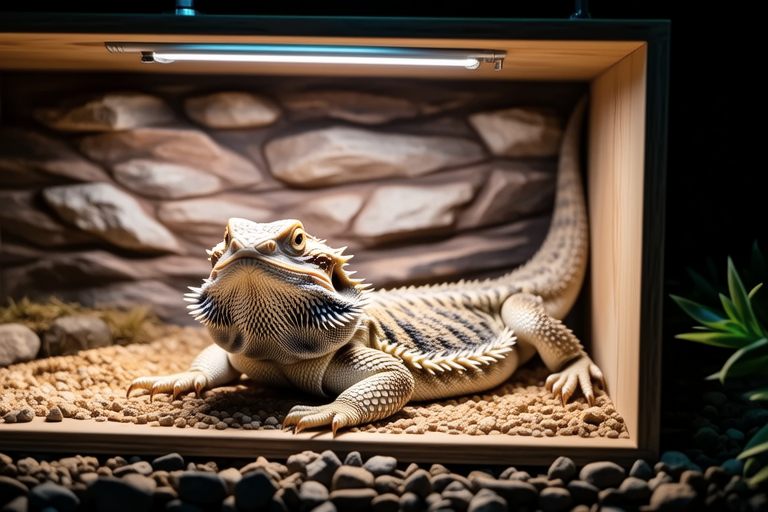
DIY Hacks for Creating the Perfect Bearded Dragon Habitat
Welcome to this comprehensive guide on how to build the perfect habitat for your beloved bearded dragon. As a responsible pet owner, providing the best living conditions for your scaly friend is crucial. This guide will walk you through the essential elements of creating a healthy, safe, and comfortable environment for your bearded dragon.
Step 1: Setting Up the Enclosure
The first step in creating a bearded dragon habitat is choosing the right enclosure. A glass tank or terrarium is commonly used, but it’s important to choose one that provides ample space for your dragon. A 40-gallon tank is suitable for an adult bearded dragon, while juveniles can thrive in a 20-gallon tank.
Ensure the enclosure has a secure lid with ventilation holes to prevent escape and maintain proper air circulation. You can also add a screen top to enhance airflow and reduce condensation inside the tank.
Step 2: Creating Temperature Gradients
Bearded dragons are ectothermic, meaning they rely on external heat sources to regulate their body temperature. To mimic their natural environment, you need to create a temperature gradient within the enclosure. The warm end should reach 95-105°F (35-40°C), while the cool end should be around 75-85°F (24-29°C).
To achieve this, place a heat lamp at one end of the enclosure. Use a thermometer to monitor the temperature and adjust the placement of the lamp as needed. It’s also advisable to use a thermostat to maintain consistent temperatures.
Step 3: Lighting Requirements
Proper lighting is vital for your bearded dragon’s health. They require both UVB and UVA light for calcium absorption and overall well-being. Install a UVB light that covers at least 50% of the enclosure. Position it close to the basking area so your dragon can bask under it daily.
Additionally, provide a full-spectrum fluorescent bulb to simulate natural daylight. This helps in regulating your dragon’s circadian rhythm. Replace the UVB bulbs every six months to ensure they remain effective.
Step 4: Substrate Choices
Selecting the right substrate is crucial for your bearded dragon’s health. Avoid using sand or gravel as substrate, as these can cause impaction if ingested. Instead, opt for safer alternatives like reptile carpet, paper towels, or reptile-safe tiles.
If you prefer a more natural look, consider using eco-earth or coconut fiber bedding. These substrates are digestible and less likely to cause harm if accidentally consumed.
Step 5: Adding Hiding Spots
Bearded dragons love to hide and feel secure in their environment. Provide several hiding spots throughout the enclosure to give your dragon options. You can use commercially available caves or create your own using cardboard boxes or plastic containers.
Ensure the hiding spots are large enough for your dragon to fit comfortably but not so large that they become cramped. Place them strategically around the enclosure to encourage exploration and provide various temperature zones.
Step 6: Creating Feeding Areas
A designated feeding area helps keep the substrate clean and prevents your dragon from ingesting dirt while eating. You can use a shallow dish or a small plate as a feeding station. Place it in a spot where your dragon frequently visits.
Alternatively, consider installing a removable platform or shelf for feeding. This allows you to easily clean the area without disturbing the rest of the enclosure.
Step 7: Maintaining Hygiene
Maintaining a clean habitat is essential for your bearded dragon’s health. Spot-clean the enclosure daily by removing any uneaten food or waste. Perform a thorough cleaning once a week by removing all decorations, substrate, and accessories.
Disinfect the enclosure using a reptile-safe cleaner, then rinse thoroughly and allow it to dry completely before replacing the substrate and decor. Regularly check for signs of mold or mildew and address them promptly.
Step 8: Ensuring Safety
Safety is paramount when setting up your bearded dragon’s habitat. Ensure there are no sharp edges or small objects that could harm your dragon. Secure any climbing structures to prevent falls.
Check all electrical components regularly for wear and tear. Keep the enclosure away from drafts, direct sunlight, and extreme temperatures. Supervise your dragon during handling to avoid accidents.
Tips and Tricks
Here are some additional tips to help you create the perfect bearded dragon habitat:
- Provide a water dish that is easy for your dragon to access. Change the water daily to ensure freshness.
- Incorporate live plants into the enclosure for added enrichment. Choose non-toxic species like pothos or spider plants.
- Consider adding a humid hide box filled with moist sphagnum moss to aid in shedding.
- Monitor humidity levels using a hygrometer. Aim for 30-40% relative humidity.
- Rotate toys and decorations periodically to keep your dragon entertained and engaged.
Conclusion
Creating the perfect bearded dragon habitat requires careful planning and attention to detail. By following these steps and incorporating our DIY hacks, you can provide your scaly friend with a healthy, stimulating environment that promotes growth and happiness. Remember to regularly assess and adjust the habitat as your bearded dragon grows and changes.
