Top 10 Most Fascinating Facts About Chameleons That Will Leave You Amazed
Chameleons, those captivating reptiles with their distinctive appearance and behavior, have long intrigued scientists and nature enthusiasts alike. These small to mid-sized lizards are known for their ability to change color, but there’s so much more to them than meets the eye. From their incredible eyesight to their unique hunting techniques, chameleons are a marvel of evolution. This article delves into the top 10 most fascinating facts about chameleons, revealing aspects of their lives that will leave you amazed.
1. Color-Changing Masters: More Than Just Camouflage
Perhaps the most famous feature of chameleons is their ability to change color. While many people believe this is solely for camouflage, chameleons actually use this ability for communication, temperature regulation, and mood expression. The color changes occur due to specialized cells called chromatophores, which can expand or contract to reveal different pigments beneath. For instance, a male chameleon might display vibrant colors during a mating ritual or turn darker when feeling threatened. Unlike some misconceptions, chameleons do not instantly match their surroundings; instead, they respond to stimuli like light, temperature, and emotions.
2. Binocular Vision: Eyes That Rotate Independently
One of the most remarkable features of chameleons is their eyes. Each eye can rotate independently, allowing them to look in two different directions at once. This binocular vision provides a 360-degree field of view, making chameleons highly efficient hunters. They can spot prey from great distances and accurately gauge its location. Compare this to most animals, including humans, who rely on both eyes working together to focus on the same object. Chameleons’ unique eye structure enables them to track and capture insects with unparalleled precision.
3. Tongue Dynamics: Fastest Strike in the Animal Kingdom
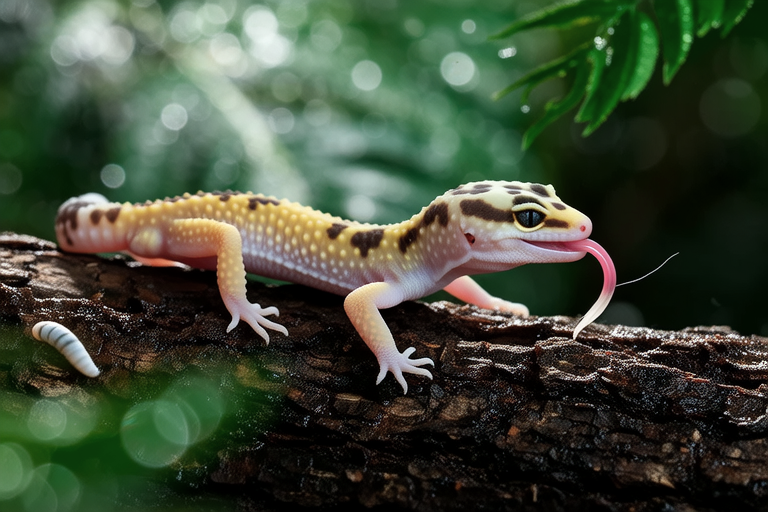
Chameleons are equipped with a projectile tongue that can extend up to twice their body length. The speed of this tongue’s strike is one of the fastest movements in the animal kingdom, reaching speeds of up to 26 body lengths per second. This rapid motion allows chameleons to catch insects that might otherwise escape. To put this into perspective, if a human could replicate this tongue mechanism, it would be equivalent to throwing a spear from one end of a football field to the other in just a fraction of a second. The tongue’s tip is covered in sticky mucus, ensuring that prey doesn’t slip away after contact.
4. Feet Designed for Grip: Zygodactyl Limbs
The feet of chameleons are uniquely adapted for gripping onto branches and other surfaces. They have zygodactyl feet, meaning that the toes are grouped into two opposing sets. On the front feet, the inner two toes form one group, and the outer three form another. This arrangement provides a powerful grip, allowing chameleons to climb and move along narrow branches with ease. Their feet also possess specialized pads that increase friction, further enhancing their climbing abilities. This adaptation is crucial for life in trees, where they spend most of their time.
5. Tail as a Tool: Prehensile and Versatile
Chameleons have prehensile tails, which means they can use their tails to grasp objects, similar to how primates use their limbs. This tail serves multiple purposes, such as balancing while moving through branches or wrapping around branches for support. Some species even use their tails to help them move between trees by swinging from one branch to another. The tail is also used as a defense mechanism; if threatened, a chameleon can coil its tail tightly around its body, making it appear smaller and less conspicuous.
6. Social Signals: Bright Colors and Displays
Chameleons use their color-changing abilities extensively for social signaling. Males, in particular, display bright colors to attract mates and intimidate rivals. During these displays, males may inflate their bodies, puff out their throats, and rapidly change colors in a dazzling show. Females also use color changes to signal their receptiveness to mating or to ward off unwanted advances. These visual signals play a critical role in chameleon society, helping to establish hierarchies and maintain order within their communities.
7. Unique Locomotion: Slow and Steady
Chameleons are known for their slow, deliberate movements, especially when walking. They move by slowly rocking back and forth, which helps them maintain balance on narrow branches. This method of locomotion is quite different from the quick bursts of speed seen in many other reptiles. When chasing prey or escaping predators, however, chameleons can accelerate quickly, though they prefer to rely on their stealth and ambush tactics rather than speed. Their movement patterns are an evolutionary adaptation that maximizes their efficiency in their arboreal environment.
8. Diverse Diet: Carnivorous Specialists
Chameleons are primarily insectivores, feeding on a wide variety of insects. However, their diet can vary depending on the species and availability of food sources. Some larger species may occasionally consume small birds, lizards, or even other chameleons. Their tongues, equipped with a sticky tip, allow them to capture prey with precision. Interestingly, chameleons also have a specialized digestive system that can break down the exoskeletons of their insect prey, extracting maximum nutritional value from their meals. This adaptation ensures they get all the nutrients necessary for survival in their often resource-limited habitats.
9. Solitary Lives: Independent and Aloof
Most chameleons lead solitary lives, interacting with others only during mating season. This lifestyle is unusual among reptiles, as many species tend to live in groups or pairs. Chameleons are territorial and can become aggressive towards other chameleons, especially males, if they encroach on their space. Their solitary nature is likely an adaptation to their tree-dwelling lifestyle, where resources such as food and nesting sites are spread out and limited. This independence allows them to thrive in environments where competition for resources is high.
10. Longevity and Reproduction: Lifespan and Mating
Chameleons have relatively long lifespans for reptiles, living anywhere from 3 to 10 years depending on the species. They reach sexual maturity at about 6 months to 2 years. Breeding occurs during specific seasons, and females lay eggs after mating. The number of eggs varies widely, ranging from 2 to 60, depending on the species. After laying, the eggs incubate underground for several months before hatching. Newborn chameleons are miniature versions of adults, capable of independent hunting almost immediately. This early independence is crucial for survival in their competitive environments.
In conclusion, chameleons are truly remarkable creatures with a myriad of fascinating traits. From their color-changing abilities and independent eyes to their powerful tongues and unique feet, every aspect of their biology is finely tuned for survival in their specific niches. Understanding these animals not only deepens our appreciation for the diversity of life on Earth but also underscores the incredible adaptability of nature. Whether you’re a seasoned biologist or simply curious about the natural world, chameleons offer endless wonder and fascination.
